

Folding cartons are one of the most versatile choices for retail packaging. They are made from printable paperboard, supplied flat in most cases, and folded into shape when needed. From skincare and supplements to confectionery and accessories, the right carton can protect a product, communicate a brand and keep packing efficient. This guide explains the common structures, what changes their performance and what buyers should confirm before ordering.
What Is a Folding Carton?
A folding carton is typically cut and creased from a single sheet of paperboard, printed and glued where required. It is shipped flat or pre-glued and erected during packing. Unlike a conventional rigid box, it does not rely on thick wrapped greyboard walls. The carton’s strength comes from its board grade, grain direction, folds, closures and overall design. Folding cartons are not the same as corrugated shipping boxes, although a retail carton may be packed inside a corrugated transit case.
Six Common Folding Carton Styles
Carton names describe different features. Some refer to the tuck-flap direction, others to the bottom-locking method or an outer sleeve. These are practical construction options, not six mutually exclusive product categories.
1. Straight Tuck End (STE)
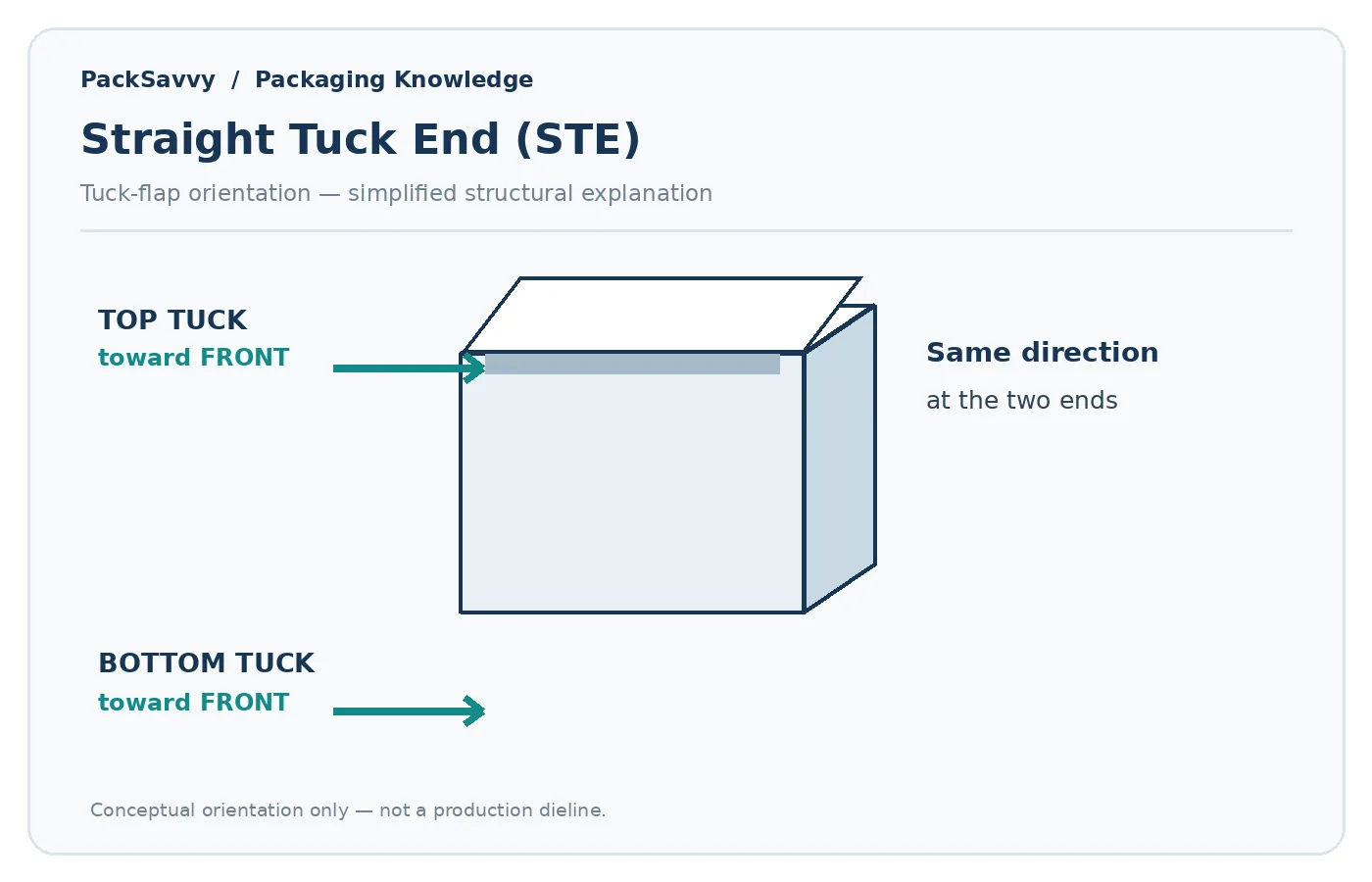
The top and bottom tuck flaps are positioned on the same side of the carton blank, allowing both ends to close in the same orientation. The main front and back panels can remain relatively clean, which is useful when shelf appearance matters. Common applications include cosmetics, personal care products and lightweight retail goods.
Buyer checks: confirm which panel carries the tuck slit, how the flaps close, and whether the product can be packed efficiently. A tuck end is not automatically suitable for heavy contents.
2. Reverse Tuck End (RTE)
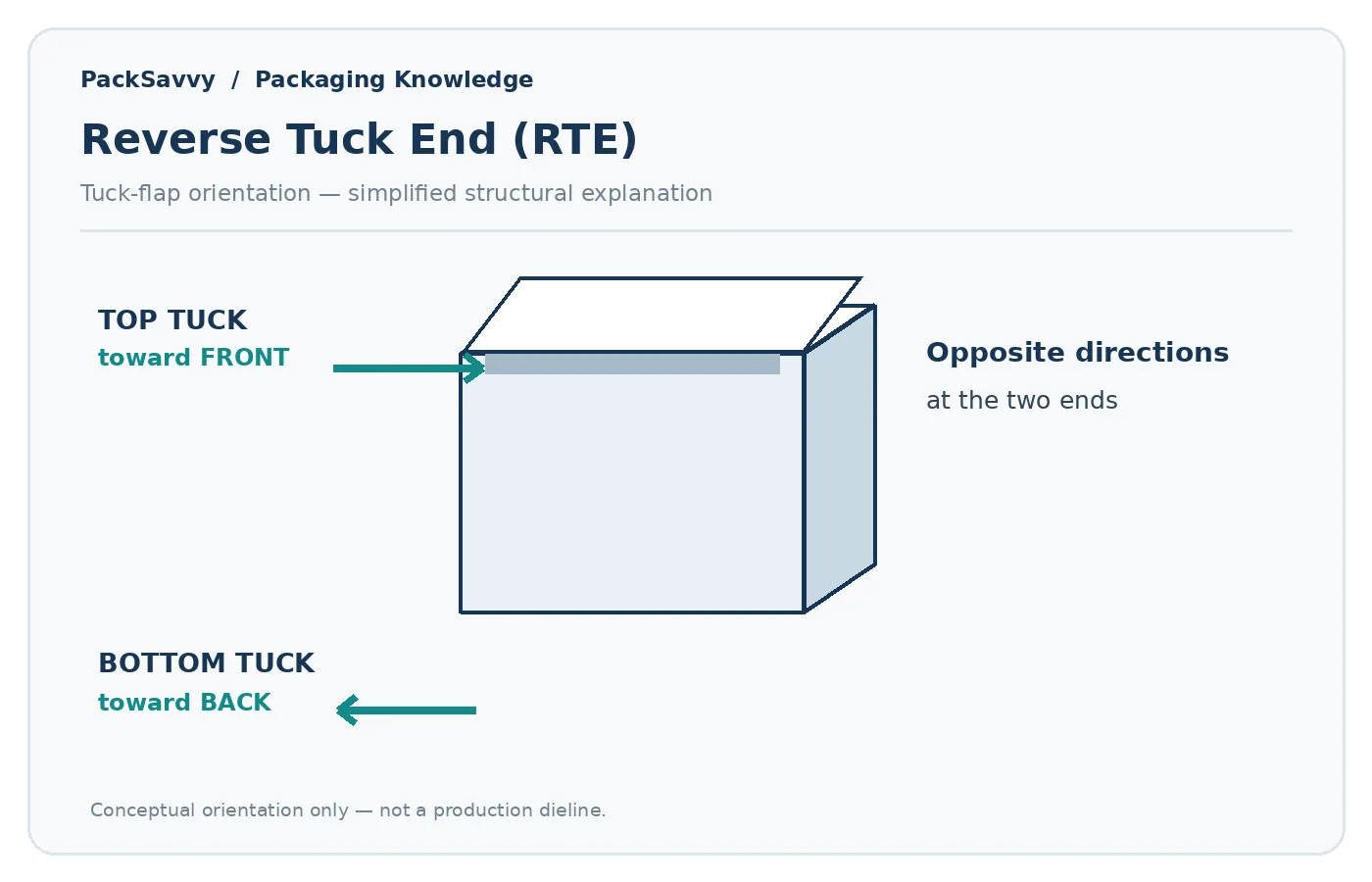
The top and bottom tuck flaps fold in opposite directions. RTE is a familiar and economical choice for many small retail cartons, including cosmetics, pharmaceuticals and accessories. STE and RTE may look nearly identical from the front; the difference is clearest on an accurate dieline or an opened sample.
Buyer checks: review the dieline and opening orientation rather than relying on a closed-box photograph. Check flap retention and how the carton behaves during filling.
3. Auto-Lock Bottom (Crash-Lock Bottom)
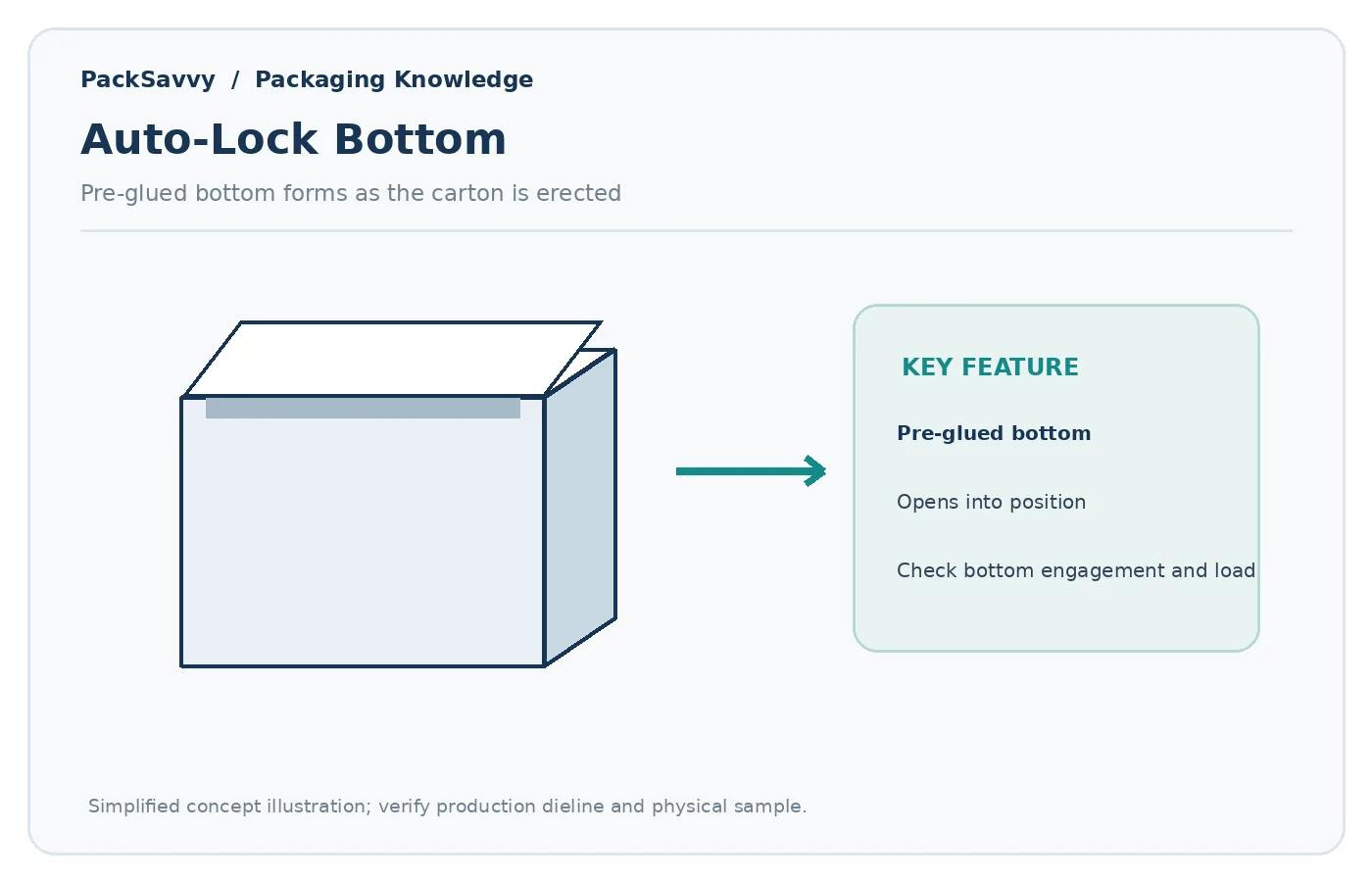
The pre-glued base is designed to form and lock into position as the carton is opened. This can make manual packing faster, particularly for products that need more bottom support than a basic tuck-end design. It is often used for bottles, jars and selected retail products.
Buyer checks: the base adds converting complexity and cost. Test the actual product weight, bottom engagement and assembly sequence. “Auto-lock” does not mean every carton is suitable for automated packing equipment.
4. Snap-Lock Bottom (1-2-3 Bottom)
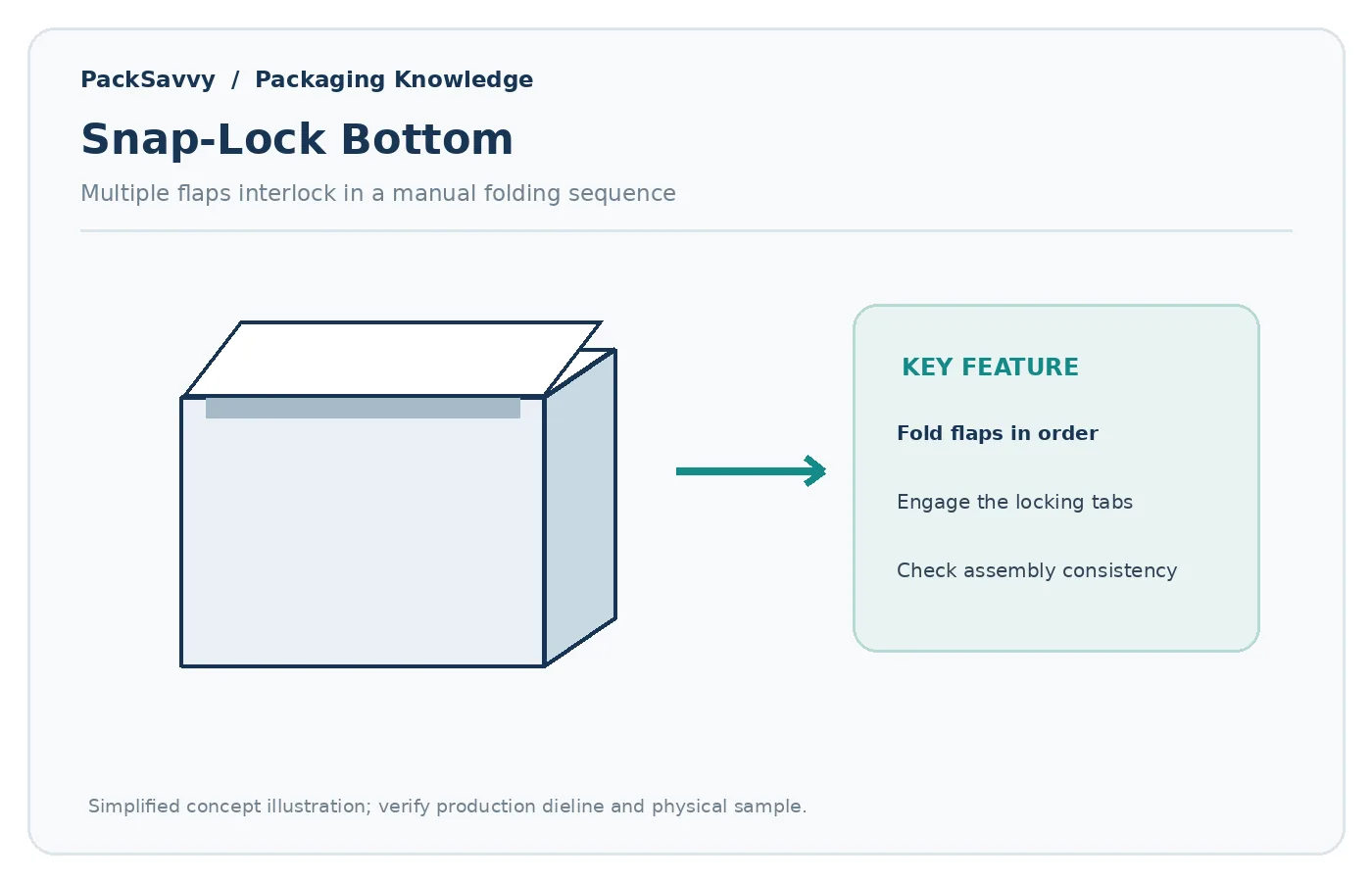
Several bottom flaps are folded in a defined sequence and interlock manually. The design can provide a more secure base than a simple tuck bottom without the pre-glued mechanism of an auto-lock bottom. It is used for various medium-weight retail products.
Buyer checks: assembly takes more steps. Test whether operators can close the bottom consistently and whether the locked base supports the filled carton.
5. Sleeve Carton
A sleeve is an open-ended paperboard wrap that slides around a product, tray or inner box. It is useful for branding, grouping products and adding printed information without replacing the primary container. A sleeve alone generally does not provide a closed protective package.
Buyer checks: confirm sleeve clearance, friction and how it will be secured during transit. Consider whether the inner pack provides sufficient product protection.
6. Gable-Top / Handle Carton
This style uses a shaped upper section, often with an integrated carry handle, to create a distinctive presentation for gifts, takeaway items and promotional packs. Construction varies widely; some versions require special locking tabs or reinforcement. Gable-top cartons and handled cartons are related presentation options, but their closure and handle constructions can differ.
Buyer checks: test the handle with the intended filled weight, confirm closing steps and verify whether the design is appropriate for food contact or moisture exposure where relevant.
Quick Comparison
| Style | Main feature | Typical use | Key check |
|---|---|---|---|
| STE | Tucks in same direction | Cosmetics, small retail | Flap orientation and retention |
| RTE | Tucks in opposite directions | General retail | Dieline and packing direction |
| Auto-lock bottom | Pre-glued base opens into place | Bottles, jars | Bottom load and erection |
| Snap-lock bottom | Manually interlocking base | Medium-weight goods | Assembly consistency |
| Sleeve | Open-ended wrap | Trays, inner packs | Fit and protection |
| Gable/handle | Shaped top or carry feature | Gifts, promotional packs | Handle strength |
Paperboard, Printing and Finishing
SBS (solid bleached sulfate) is often selected for a smooth white printing surface. FBB (folding boxboard) offers a useful balance of stiffness and weight for many retail applications. Kraft and recycled paperboards can create a natural appearance, but print results and surface consistency vary by grade. The best choice depends on product weight, carton dimensions, print requirements, supply availability and budget.
Finishes such as matte or gloss coating, lamination, foil stamping, embossing and spot UV can enhance presentation. They also affect cost, folding performance and, in some cases, recyclability. Ask for a physical printed sample when appearance or fold quality is important. For food, cosmetics or other regulated applications, confirm the required material and ink specifications rather than assuming any board is suitable.
How to Choose the Right Carton
Start with the packed product: dimensions, filled weight, fragility and how it will be displayed. Then consider how many cartons will be filled, whether packing is manual or automated, and how the finished packs will be transported. A fast-closing bottom may justify a higher unit price if it saves meaningful packing time; a simpler carton may be better when volume is low.
When requesting a quotation, provide the product dimensions, estimated filled weight, target order quantity and preferred board thickness or grade. If you have an existing carton sample or dieline, share it for structural review. Final board selection and carton dimensions should be confirmed through sampling.
Before mass production, approve a structural sample and a printed proof. Test the product fit, flap or bottom retention, opening and closing, shelf presentation and transit packing. For heavier or fragile products, the outer shipping carton and internal support matter just as much as the retail carton itself.
Folding Cartons vs. Rigid Boxes
Folding cartons are usually lighter, flatter to ship and more economical for everyday retail volumes. Rigid boxes typically offer a heavier, more substantial unboxing experience but require more space in conventional assembled form. Neither is automatically better: choose based on the product, target price, desired presentation and total landed cost.
Final Thoughts
The best folding carton is not necessarily the most elaborate. It is the one that protects the product, runs smoothly through packing and gives customers the right brand experience at a sensible total cost. PackSavvy can help review carton structure, board options, printing and finishing for your custom packaging project. Share your product dimensions, weight, order quantity and artwork to discuss suitable options.
© 2026 PackSavvy. Original editorial content and proprietary materials. All rights reserved where applicable.
For permission to reproduce, translate, or commercially reuse our proprietary content, please contact PackSavvy.