
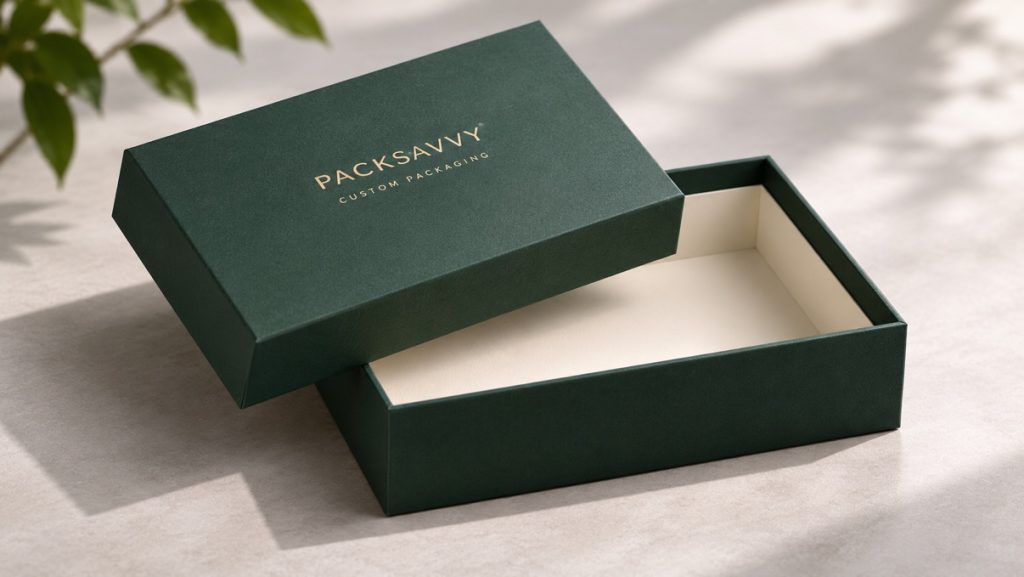
Rigid boxes—also called setup boxes—are the premium packaging choice for gifts, cosmetics, jewelry, electronics and high-end retail. Their thick paperboard cores and wrapped surfaces create a substantial, high-quality feel. But not all rigid boxes are built the same way, and the right structure depends on your product, your budget and how the box will travel. This guide explains six common rigid box styles and how to choose between them. We focus on conventional rectangular or square constructions; round, oval, heart-shaped and other specialty shapes deserve a separate guide.
- What Is a Rigid Box?
- Six Common Rigid Box Styles
- Rigid Box Style Comparison
- How to Choose the Right Rigid Box
- Final Thoughts
What Is a Rigid Box?
Most rigid boxes are made from greyboard or chipboard—usually 1–3 mm thick, depending on the size and weight of the product—cut and formed into a stable structure, then wrapped with printed or decorative paper. Unlike ordinary folding cartons, which are made from thinner paperboard and arrive flat, most rigid boxes are delivered already formed and ready to fill. Collapsible rigid boxes are the exception: they ship flat and are assembled at the destination, but they are still rigid boxes once erected, not folding cartons.
Wraps may use coated, uncoated, textured or specialty papers, and surface finishes such as lamination, foil stamping, embossing or debossing can be added. Inserts in paperboard, molded pulp, foam or fabric-covered board protect the product and complete the presentation.
Six Common Rigid Box Styles
Each style below covers its basic structure, its strengths and watch-outs, and the products it suits best.
1. Lid and Base Rigid Box
A separate lid fits over a bottom tray. Depending on the design, the lid may cover all or part of the base. It is the most familiar rigid box structure and suits gift sets, cosmetics, accessories and apparel packaging.
Advantages: premium presentation buyers recognise instantly; straightforward access; many insert and finish options.
Watch-outs: allow for lid-to-base clearance; check for scuffing where the lid meets the base; assembled boxes take up more shipping space than flat-pack styles.
2. Shoulder and Neck Rigid Box
A shoulder or neck component is fitted inside the base to create a stepped reveal and support the lid. The visible neck can be flush, recessed or deliberately exposed—often in a contrasting colour for a distinctive premium look. This construction suits premium gifts, cosmetics and spirits packaging.
Advantages: controlled lid alignment; sophisticated reveal; strong visual identity.
Watch-outs: an extra fitted component adds cost and assembly work; wrapping accuracy and tight fit tolerances matter more than on a standard lid-and-base box.
3. Magnetic Closure Rigid Box
Often built as a book-style box with a hinged flap, this style uses concealed magnets to hold the lid closed. Magnetic closure is a fastening feature, not a separate structural family: a magnetic box may also be collapsible, and a hinged lid box may use magnets. It suits corporate and luxury gifts, cosmetics and electronics.
Advantages: refined opening experience; repeatable, secure closure; strong presentation.
Watch-outs: magnet placement, polarity and alignment need care to ensure reliable closure performance; magnets add component cost.
4. Rigid Drawer Box
A tray slides inside a rigid outer sleeve. Ribbon pulls or thumb cut-outs help opening. It suits jewelry, small electronics, premium confectionery and accessories.
Advantages: distinctive sliding reveal; compact presentation; inserts fit easily inside the tray.
Watch-outs: friction and clearance between sleeve and tray; ribbon strength; scuffing on the sliding surfaces; the tray needs a stop so it cannot slide out by accident.
5. Hinged Lid Rigid Box
The lid stays connected to the base through a wrapped hinge or another engineered hinge arrangement, so it cannot be misplaced. It suits cosmetics, stationery, keepsake boxes and products that are opened repeatedly.
Advantages: attached lid; convenient presentation; good for repeated access.
Watch-outs: hinge fatigue over many openings; opening angle and lid alignment; wrap cracking along the hinge line; possible extra assembly work.
6. Collapsible Rigid Box
Engineered fold lines and wall panels allow a rigid-looking box to travel flat and be assembled at the destination. Corners are usually secured with adhesive strips, magnets or other locking arrangements—not all collapsible boxes use the same mechanism, so confirm the fixing method before ordering.
A collapsible rigid box ships flat, but it is not a folding carton: once properly assembled, it can offer the sturdy construction and premium appearance associated with conventional rigid boxes. The trade-off is destination labour and corner stability, so always check an assembled sample. It suits large-volume import programs where freight and storage dominate the total cost.
Advantages: much lower storage and shipping volume; premium appearance after assembly.
Watch-outs: assembly labour at the destination; corner stability and adhesive reliability; strength depends on correct assembly—test a sample under the real product load.
Rigid Box Style Comparison
Use the table below to compare the six styles at a glance. The cheapest unit price is not always the lowest total cost: a collapsible box may cost more at the factory but save far more on freight and storage, while an assembled box may cost less per unit but more to ship. Compare total landed cost—unit price plus freight, storage and any assembly labour—on the same size, board, finish and quantity.
| Style | Structure | Best for | Key watch-out |
|---|---|---|---|
| Lid and Base | Separate lid over a base tray | Gift sets, cosmetics, apparel | Shipping volume; lid clearance |
| Shoulder and Neck | Base with an inner neck that seats the lid | Premium gifts, cosmetics | Extra component and cost |
| Magnetic Closure | Book-style flap held by concealed magnets | Corporate and luxury gifts | Magnet alignment and cost |
| Drawer | Tray sliding inside an outer sleeve | Jewelry, electronics, confectionery | Tray friction and scuffing |
| Hinged Lid | Lid attached to the base by a wrapped hinge | Repeated-access products | Hinge fatigue and alignment |
| Collapsible | Flat-pack walls assembled at the destination | Large-volume import programs | Assembly labour; corner stability |
How to Choose the Right Rigid Box
Start from your product and your priorities, not from the box style:
- Classic gift presentation: start with lid and base; confirm lid fit and transport cube.
- Distinctive premium reveal: consider shoulder and neck; confirm neck height and assembly tolerance.
- Convenient, repeatable closure: consider magnetic closure; confirm magnet strength and alignment.
- Sliding unboxing experience: consider a drawer box; confirm tray friction and the pull feature.
- Attached lid for repeated use: consider a hinged lid; confirm hinge life and opening angle.
- Space-efficient importing: consider collapsible; confirm assembly labour and corner stability.
Before ordering, confirm the details on a physical sample: dimensions, lid fit, corner appearance and opening performance. A sample also settles the questions a rendering cannot—actual board stiffness, wrap behaviour at the folds and the real feel of the box in the hand.
Final Thoughts
The right rigid box balances brand presentation, product protection, manufacturability and total cost. The six styles above cover most premium packaging needs; the best choice is the one that fits your product, your volumes and your supply chain—not necessarily the most elaborate one.
PackSavvy helps buyers evaluate box structure, materials, finishing and production requirements for custom packaging projects. Share your product dimensions, approximate weight, target quantity, preferred style and artwork to discuss suitable options and request a quotation.
© 2026 PackSavvy. Original editorial content and proprietary materials. All rights reserved where applicable.
For permission to reproduce, translate, or commercially reuse our proprietary content, please contact PackSavvy.